
Michael Fried in conversation with SARAHCROWN
Our conversation with Michael Fried, as he discusses his work, inspirations, and future endeavors
SARAHCROWN: Take us into your studio and daily practice. How does a typical day in the studio look like for you?
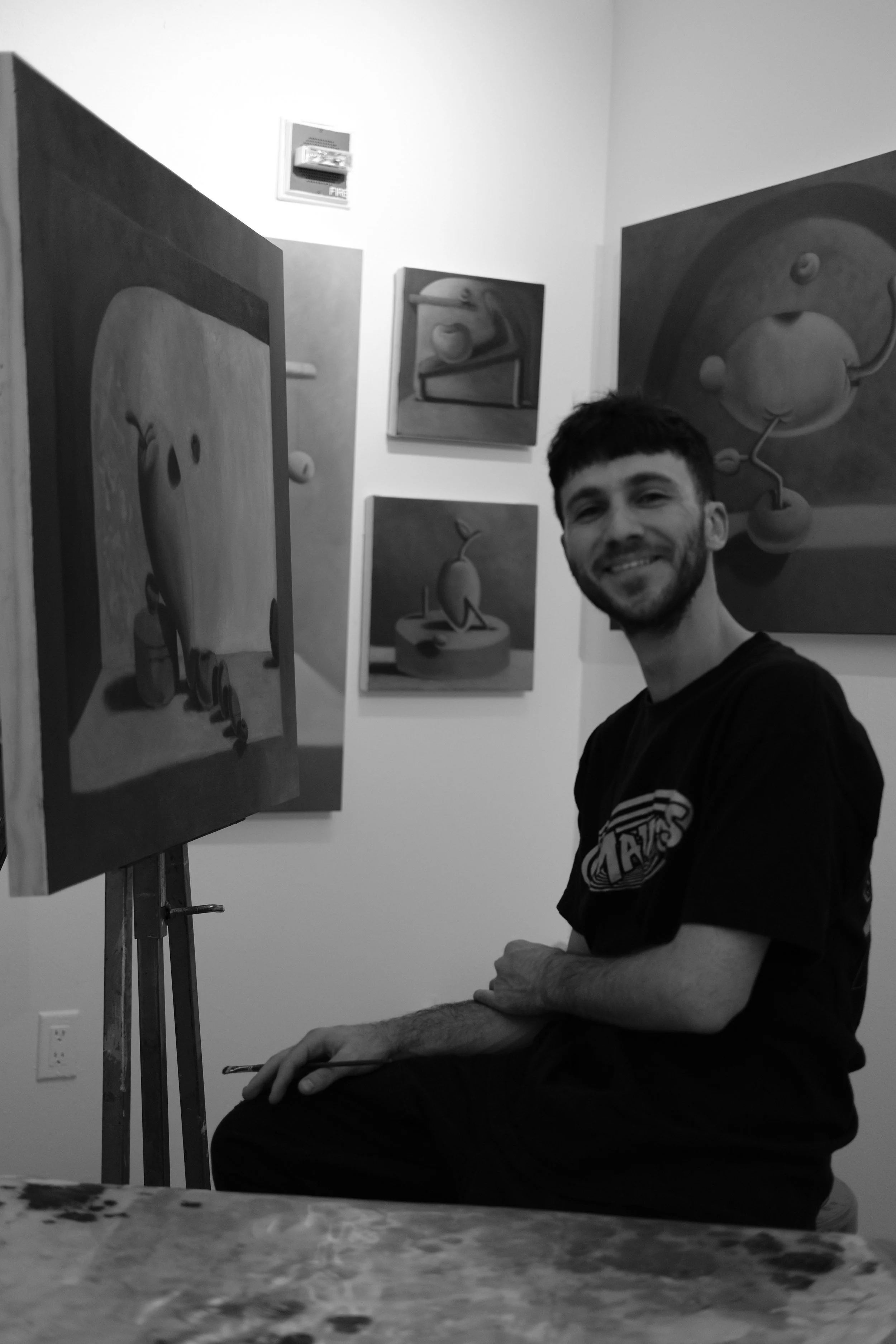
Michael Fried in his studio, 2026
MICHAEL FRIED: I like to treat studio days like a job. I find I can stay in a clear and good mental state if I stay regimented and keep myself on a schedule. Ideally I get into the studio at 9am with a coffee and get to work. I will take a lunch break somewhere around 1pm then keep painting until 6 or 7, maybe later. That is what a great studio day looks like for me. When everything works out I leave the studio feeling amazing about myself. However, sometimes painting doesn’t care about your schedule and how productive you want to be. Some days it just doesn’t work. Somedays I’ll get into the studio at 10 and nothing is working out, painting just isn’t happening. On those days I’ll leave the studio within a couple hours feeling terrible about myself as an artist. If it’s not a painting day, I try to draw daily, and also look at books with pictures that interest me. My favorite books to look at right now are an American bird decoy book and a Greek-style home book.
SC: What are some enduring influences on your practice? Do they come from an internal or external source?
MF: My influences really come from external sources. I have always been like a sponge and obsessed with things that make my reality more exciting and colorful. Cartoons, vinyl toys, music, sculpture, painting, and nature. All of these things have a way of breaking the rules of reality. Especially nature—it can get so weird. I’d say that stuff has the biggest impact on me and my work. I wouldn’t say that’s my influence for making art in general though. It might sound cliche but making art and painting specifically feels like something I just have to do right now. It wants to come out of me and I let it. It’s just how everything I'm interested in seems to manifest.
SC: Your paintings have a distinct texture and visual language to them. Does this come intuitively?
MF: Texture definitely comes naturally from listening to the painting. The painting will tell you what it wants, it will also tell you when to stop painting. I don’t let my idea of how I want a painting to look constrict me of how it actually turns out. Which is hard. It can be hard to let go. This is why I paint in very thin layers. I like to let the painting build up slowly and give it an opportunity to speak to me. When it comes to my visual language, it’s also a form of letting go. This is where not being a control freak is key. I don’t have a style or anything specific in mind. I let my interests and my brain just do their thing. I’m really just the machine or mechanism that helps it all come out.
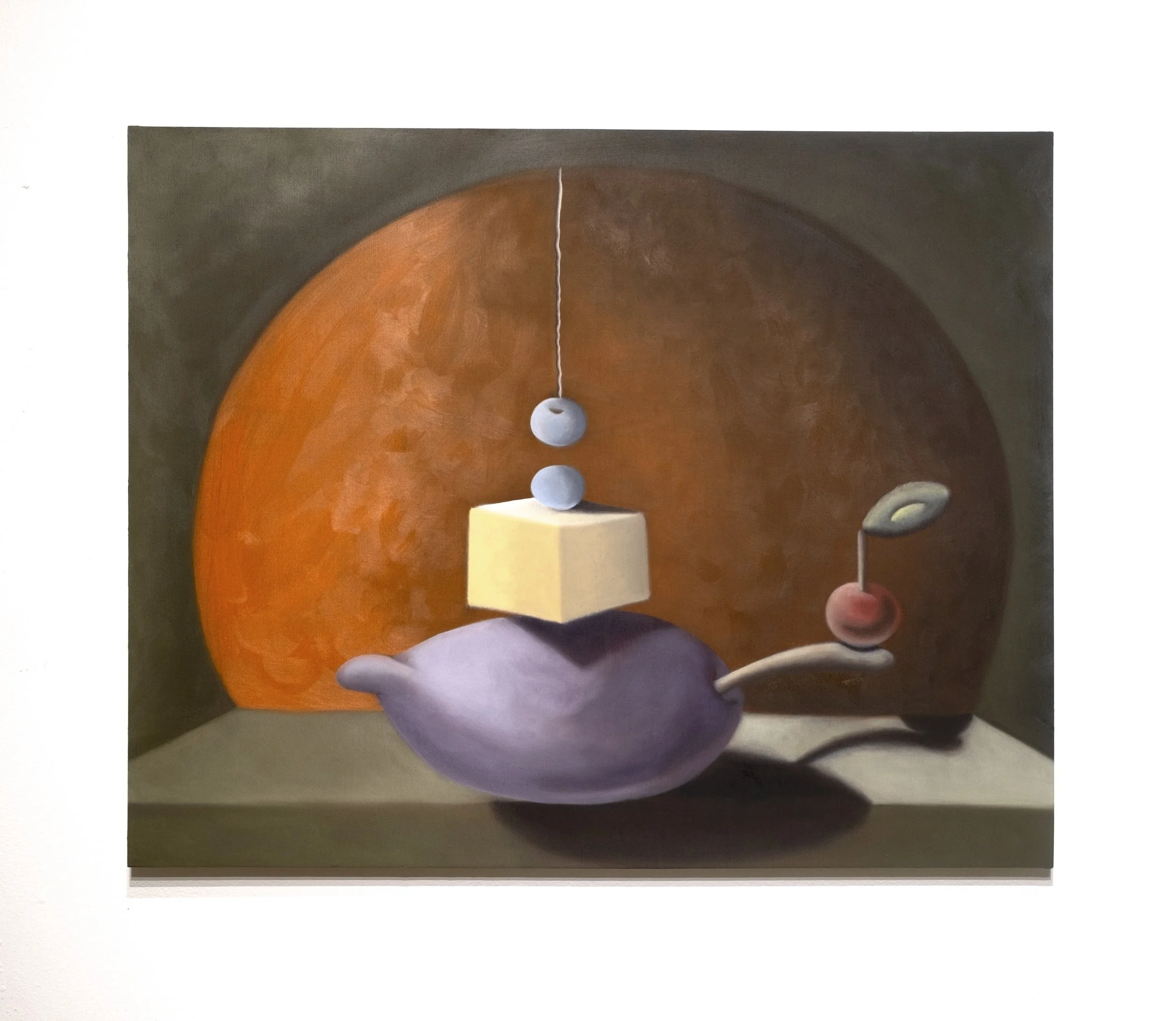
Michael Fried, Is Trying To Present Itself Tomorrow, 2026, Oil on wood, 24 x 30 in
SC: I love the part of your artist statement that says, "My paintings construct still life scenes that function more like rehearsals than depictions of reality." It makes me wonder how you build your still lives--are they constructed with props in real life and translated to canvas or just freehanded with no reference? Is a pear still a pear if it is the drawn memory of a pear?
MF: My still life paintings are done from imagination. I borrow from reality when it comes to light and shadow but I don’t physically set up any of these compositions. That last question is really what has been interesting to me lately. Is it still a pear? No, it's a painting of a pear, and to take it even further, it’s an idea of a pear. There are levels of taking things out of context and I’m interested in pushing that. A reference that comes to mind for this conversation is a painting by Magritte titled La trahison des images. A painting of a pipe with text under that reads; this is not a pipe. It’s spot on. It is not a pipe, it's a painting of a pipe. Merely an idea of a pipe.
SC: When it comes to "style" and "technique" , you mention the Spanish Bodega Painters as a significant influence. Can you elaborate on that?
MF: For me, the Spanish still life painters are absolute masters of composition and drama. They can take the most plain subjects and make incredibly captivating works. This is a game that excites me more and more and is something that I am currently exploring in my own work. Morandi, Guston, and Magritte, these are some of my favorite painters. They all do something similar where their paintings are so close to reality but something is off or they are completely breaking the rules of reality. It creates tension, a very important thing for me. Tension breeds intrigue and interest, and as a viewer that’s what keeps me involved in a painting.
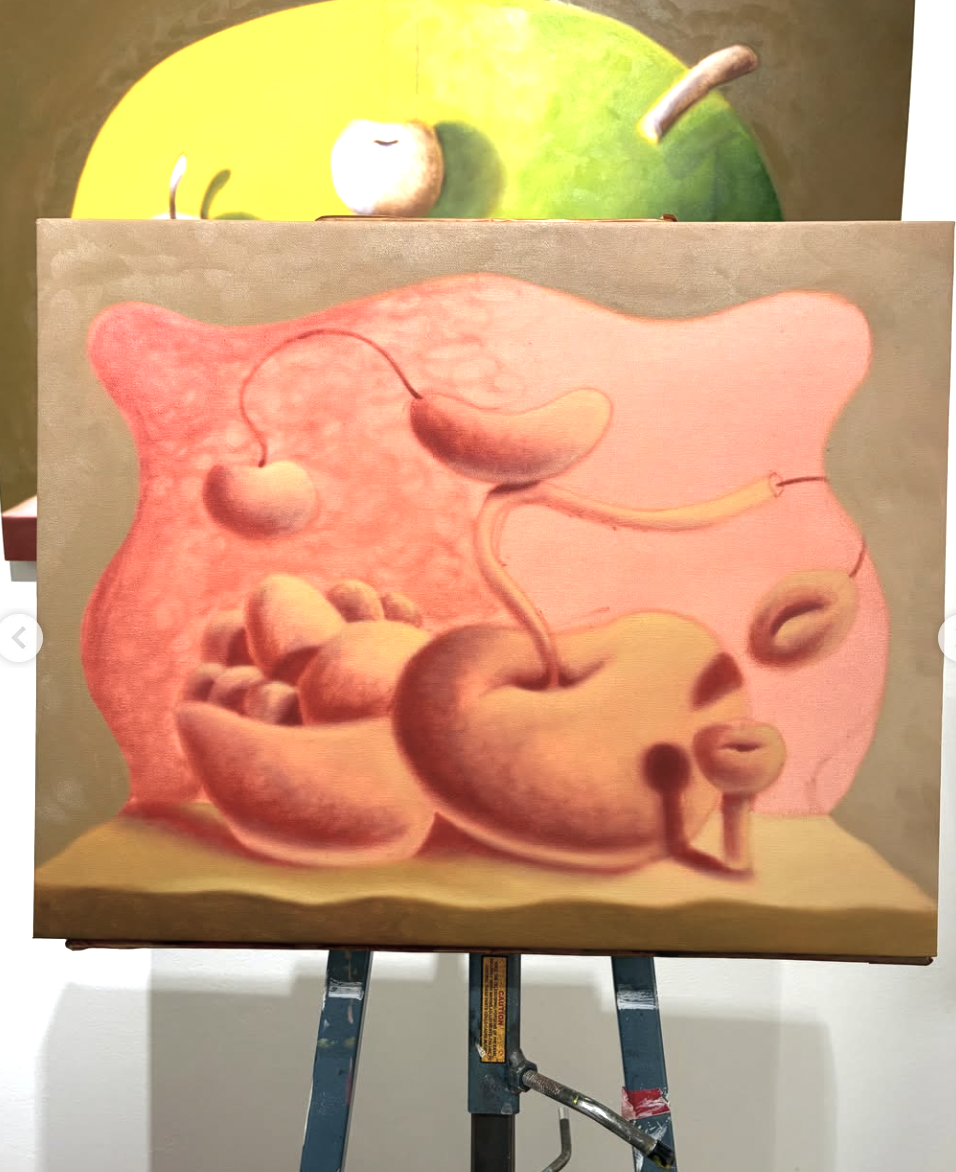
WiP of Is Tried and Tested and Tested, 2026
SC: What about the world of animation and cartoons?

Michael Fried, Is Tried and Tested and Tested and Tested, 2026, Oil on canvas, 16 x 20 in
MF: This is where I fell in love with art. Before I was into painting, sculpture, or any type of “fine art”, I was madly in love with animation and actually wanted to be an animator. There is an innocence but also a serious level of strange to the cartoons I was introduced to at a young age. The smurfs, the Snorks, the Simpsons. I will also mention the Muppets, Sesame Street, and Peewee’s Playhouse. These are like cartoons brought to life which was a whole other level of mind blowing. Growing up, I wanted to live in those worlds.
SC: I am fascinated by the titles of your pieces, and as they might relate the subject matter. Can you talk a little bit about that—what comes first, the name or the piece?
MF: They happen at the same time. I usually have a list of titles in whatever sketchbook I’m working in and also in my notes app. They come quick and they come from all over. Lines in movies, words in a song, or my thoughts in passing. Whatever sticks out to me I write down, and tweak it a bit. It follows my interest in taking things out of context. I also like longer titles, it becomes another space to play. I find one word titles to be so anti-climactic and boring. I have a three word minimum. When it comes to naming my paintings, once I finish a work, I sit down with it hung up on the wall and reference my list. Usually there is a title there that just seems right. I don’t go for absolute meaning or title something based on how the work looks. It happens intuitively and is just a feeling. The human brain is so interesting, you can pick titles at random but the brain will always find some type of connection there.
SC: I found the wording of this quote from you artist statement especially interesting: "...the paintings become frozen rehearsal spaces where forms simply exist beside one another without the pressure of solution or final performance." Born and raised in New York, a city known for its pressure of performance, do you think your practice came about as a way to combat the city's hustle culture?
MF: I’m not sure I consider social performance and hustle culture as the same thing. However, I can say that I’ve never actually considered New York City’s hustle culture as something to combat. I actually think it’s contributed to my drive to make work persistently. However, when it comes to society as a whole, especially in New York, and even greater on social media, social performance is at an all time high. It all feels very fake to me and it’s something I’m very interested in observing. I think it’s a social media problem. We have become obsessed with selfies and our personal blogs. Naturally with that comes keeping up with an image or idea of how you want to be perceived. I want to relieve my paintings of performance. It should only be a space to try out ideas, never coming to a conclusion and never trying to be something.
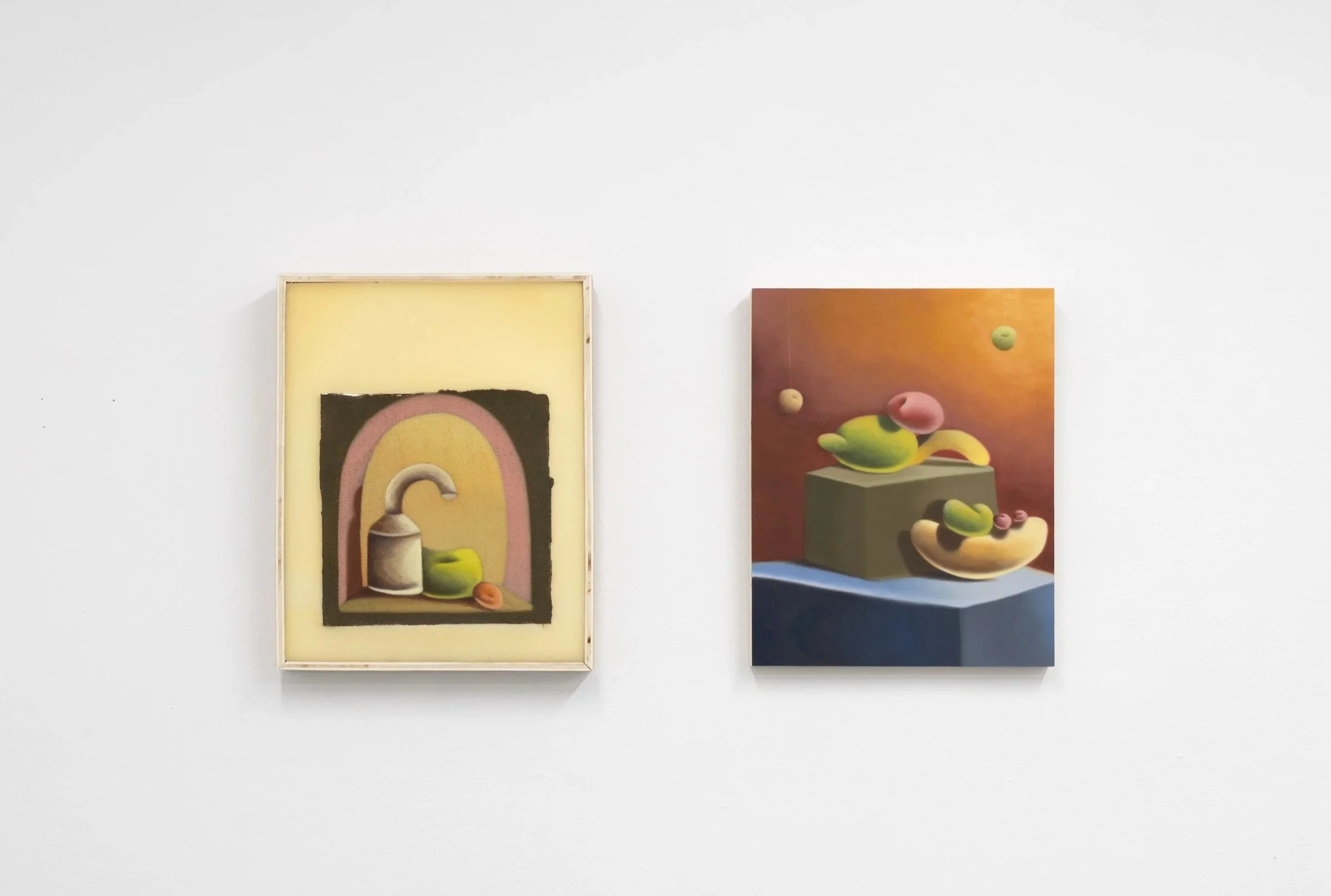
Installation shot of Michael Fried’s paintings in SARAHCROWN’s 2026 Summer show, Emerging Frequencies (Left: Is Neither Version Of What, 2026. Right: Is Feeling As Normal As Ever, 2026).
SC: One of your paintings, Is Neither Version Of What, is Oil paint on Dry wall, cement, foam, wood. How does materiality come in to play for you when creating a work?
MF: Experimenting with materials comes from a few different things. Firstly my interest in context-;how can I take a painting out of context? How can I present it differently than how it’s usually presented? This question has led me to experiment with different materials. I also consider my influences and what I like most about them. How can I bring the materiality of puppets into my work? Also, I greatly admire the works of the Chicago Imagists. They were amazing at making work on non traditional surfaces. I like that element of surprise. Lastly, sometimes I’m just interested in how it will feel to paint on a certain surface, just plain curiosity. These are my starting points. Once I have certain materials in mind that I want to paint on, I go through my sketchbook and see what drawings feel like they belong on cement or whatever material is speaking to me at the moment.
Yes, it’s definitely something I will continue to explore until it feels like I’ve overdone it or I’m repeating myself. Who knows if that day will ever come but once something feels boring to me I stop immediately. However, I usually like doing something else while I make “traditional” paintings. I like making animations, I like painting on different materials, and for a bit I was making tiny little sculptures. Bouncing back and forth between things keeps everything exciting for me.
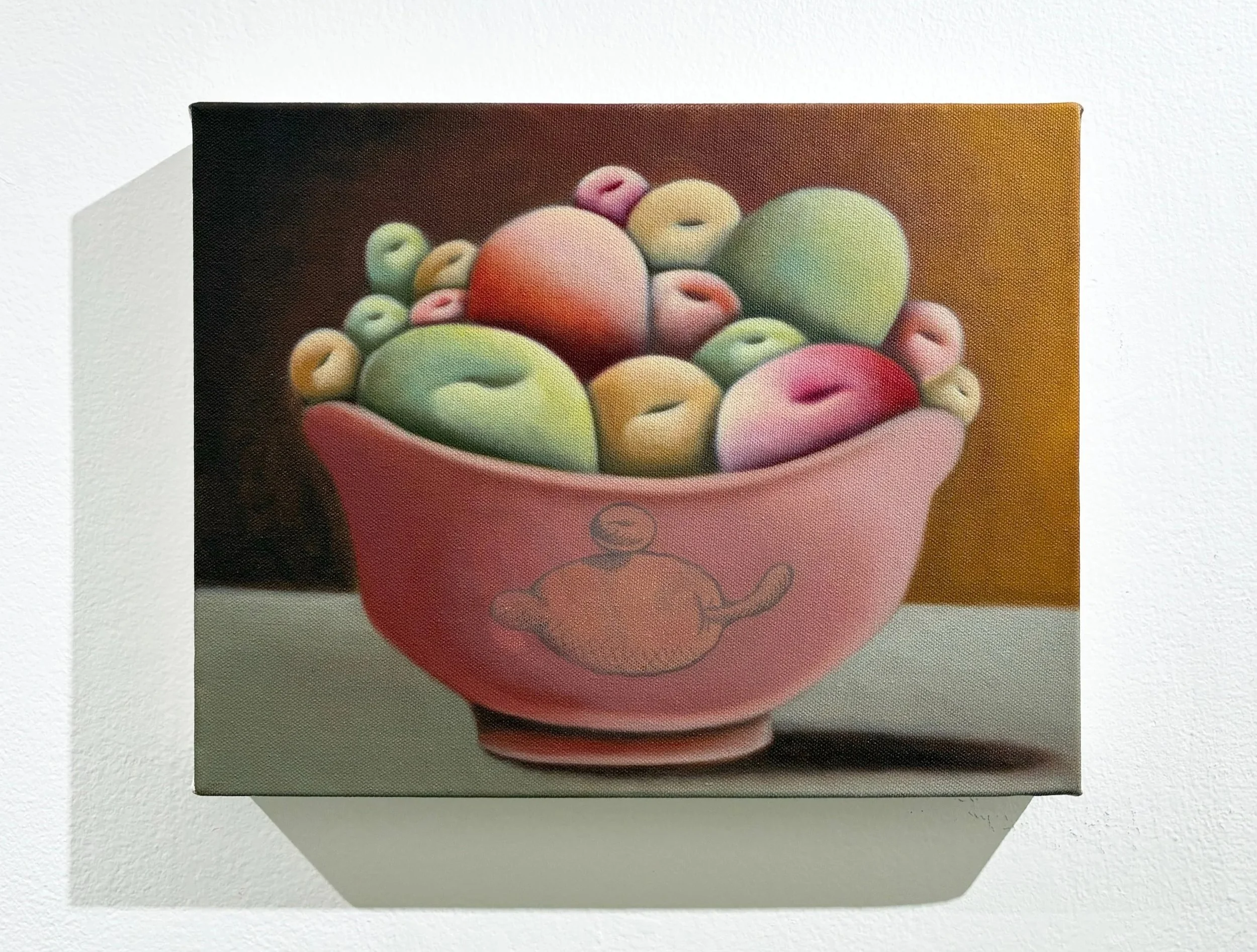
Michael Fried, Has Not Been Seen And Refuses To, 2026, Oil on canvas, 12 x 14 in
SC: You are about to start your MFA Program in Boston this fall. What inspired you to proceed with this master program and what do you wish to accomplish ?
MF: Pursuing a masters degree just felt like the natural next step for me. I want to be included in very serious, tough critiques and conversations about art. It’s a challenge that I’m prepared for. I also want the degree so I can hopefully teach at a college level. I feel like I have skills and thoughts about art making that might be helpful to a younger generation of artists. My professors in undergrad taught me so much, it really felt like a gift. I really admire those who have extensive knowledge about something and are eager to share it with others. I’d love to be able to share what I know with a younger generation of artists.
——————————
ABOUT THE ARTIST
Michael Fried (b. 1998, New York, NY. Lives and works in New York City)
Drawing from the traditions of Renaissance still life, Spanish bodegón painting, Morandi, Philip Guston, Nicolas Party, and even Looney Tunes, Fried stages everyday objects within carefully constructed compositions. His works balance structure and instability, revealing the persistent human desire to create meaning, harmony, and control within an inherently uncertain world.
In his own words, "My paintings construct still life scenes that function more like rehearsals than depictions of reality. I build imagined environments where objects are removed from their usual context and placed into controlled environments where their usual behavior no longer applies. Fruit-like forms, geometric shapes, shadows, and fragments of architecture repeat throughout the work like a cast of actors moving between staged spaces. The paintings occupy a space between the familiar and the artificial. Scale shifts, color behaves unnaturally, and objects refuse to fully settle into something that is completely identifiable. Nothing appears to be happening, but the paintings hold onto the tension that something could. By stripping objects of function and resisting fixed meaning, the paintings become frozen rehearsal spaces where forms simply exist beside one another without the pressure of solution or final performance."
Michael Fried is a recent graduate from the School of Visual Arts in New York City, and continues to live and work in NY.